
Category: America

  • Suitcase Buying Guide: Choose the Best Luggage

    Suitcase Buying Guide: Choose the Best Luggage

    Starting a journey means picking the right luggage that fits your travel needs. This guide will help you find the perfect luggage that meets your needs and shows your style. Whether you want a tough carry-on or a big checked bag, we’ve got you covered. This guide will help you make a smart choice for your travels.

    Key Takeaways

    • Suitcase weight is a critical factor, with full-size models ranging from 3.1kg to 5.9kg when empty.
    • Airline weight and size restrictions for carry-on luggage must be considered when selecting a lightweight cabin case.
    • Hard-shell suitcases, like the American Tourister Airconic Spinner, can weigh as little as 3.2kg, providing a viable lightweight option.
    • Cabin bags with expandable features, such as the Away The Carry On Flex, offer extra packing space when needed.
    • Luggage with smart features, such as location tracking and digital locks, can enhance convenience and security for travelers.

    Importance of a Reliable Suitcase

    Your luggage should be more than just a place for your stuff. It should be a reliable friend that makes your trip better. A reliable suitcase is key for a worry-free and fun trip. It must be durable enough to withstand the rigors of travel, work well for your packing needs, and be budget-friendly.

    A good travel-friendly bag is great for any trip, no matter where you’re going or how you’re getting there. It should be strong to keep your things safe and handle the bumps of travel without breaking. You don’t want your suitcase to break on you, leaving you with damaged or lost items.

    Feature Importance
    Durability Luggage should be able to withstand the rigors of travel, including being dropped, thrown, and exposed to the elements.
    Functionality Suitcases should be designed to meet the specific needs of travelers, with features like ample storage, easy maneuverability, and organized compartments.
    Budget Travelers should be able to find a reliable suitcase that fits their luggage budget without compromising on quality or features.

    Buying a durable and travel-friendly bag means your stuff is safe and your trip is smooth and fun. A reliable suitcase is a must-have for travelers.

    Factors to Consider When Luggage Shopping

    When looking for a new suitcase, think about how you’ll travel. Consider airplanes, trains, cars, and buses. Think about the size and weight you need based on your trips. Also, think about how much you’ll pack.

    Look at different luggage types like hardshell or soft-sided. Think about the materials and features you need. Compartments, handles, and wheels make packing easier. These details help you find the right suitcase for your needs.

    Transportation Modes and Travel Duration

    The way you travel affects the luggage you should choose. For flying, remember the size limits for carry-ons. If you’re taking trains, buses, or taxis, choose a lighter suitcase. For road trips or longer vacations, you might need a bigger bag.

    Luggage Types and Materials

    Hardshell luggage is strong but heavy. Soft-sided bags are flexible and lighter. Think about what you need: protection or easy carry.

    Luggage Type Pros Cons
    Hardshell – Durable protection
    – Sleek appearance
    – Heavier weight
    – Less flexible
    Soft-sided – Lightweight
    – Flexible packing
    – Less protection
    – Can get dirty/scuffed

    Think about your travel plans and what you need to pack. This way, you can pick the best luggage for your life and trips.
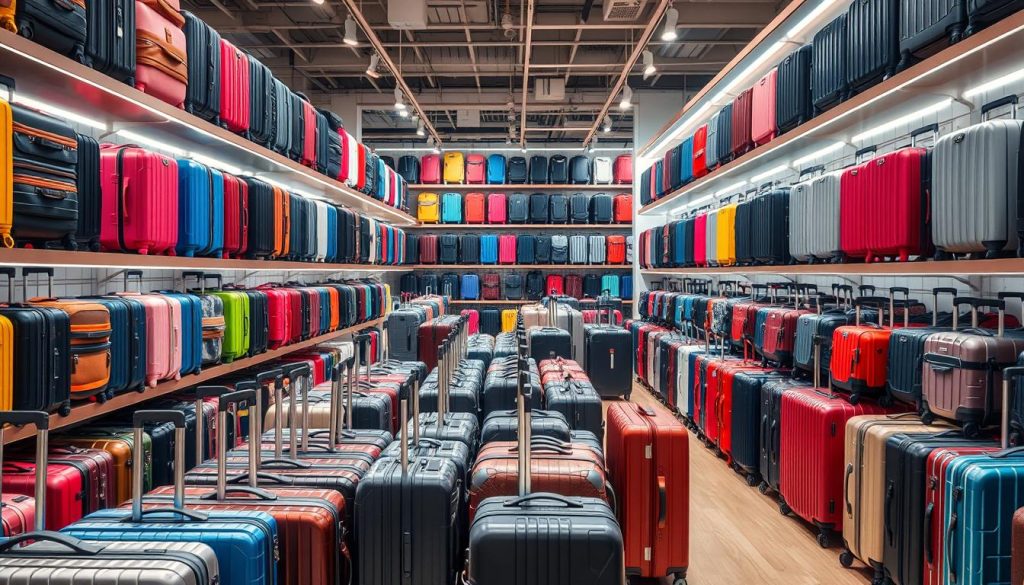
    Luggage shopping

    Zippers: Quality Matters

    The zipper is key in suitcases. It keeps your stuff safe while you’re on the move. So, picking a good zipper is crucial when you’re looking for the right luggage.

    Chain Zippers vs. Coil Zippers

    Chain zippers have interlocking metal teeth and are stronger and more secure than coil zippers. They’re less likely to break or get stuck. This makes them a top choice for quality suitcases.

    Coil zippers, on the other hand, use parallel polyester coils. They can be more prone to damage and might not protect your items as well.

    Look for suitcases with YKK zippers if you can. YKK is a top name in zippers for their quality and durability. They’re the leading zipper maker in the world, known for their great performance and long life.

    “Zippers are one of the most common failure points in luggage, so choosing a suitcase with quality suitcase zippers is crucial for ensuring your belongings stay safe and secure during your travels.”

    Low-cost luggage often has poor zippers, which can break easily and cost you more to fix or replace. Spending on a suitcase with zipper quality that can handle travel well is smart. It saves you time, money, and trouble later on.

    Handles: Comfort and Convenience

    When picking out suitcase handles, think about how they make you feel. Choose suitcase handles that adjust in length for a perfect fit. This way, you won’t have to strain your neck or back.

    Handles with a soft grip are a must for comfort. They make carrying your bags over long distances easier. You won’t feel the weight as much.

    Retractable handles are smart because they can be tucked away. This keeps them safe from damage while you’re on the move. Two-post handles on wheeled luggage let you carry extra bags or totes easily. This keeps everything tidy and within reach.

    Telescoping handles are great for convenience. They extend and retract easily. This means you can adjust the handle to fit your height perfectly. It also helps reduce strain on your arm and shoulder when you’re moving through crowded places.

    Handle Feature Benefit
    Adjustable Length Allows for a personalized fit
    Soft Grip Provides comfort during extended carrying
    Retractable Reduces the risk of handle damage during travel
    Telescoping Enables easy adjustments for a customized experience

    When you’re looking for a new suitcase, try out the handles first. Make sure they’re comfortable and convenient. This will make your travels smoother and less stressful.

    Suitcase handles

    Compartments: Organized Packing

    Choosing the right suitcase can change how you pack. The number and size of pockets inside and out matter a lot. Modern suitcases have special pockets for laptops and other electronics. These pockets protect your valuables and make them easy to find on your trip.

    There are also zippered pouches and compartments for better packing. They help keep things like toiletries and chargers separate. For those who care about style, some suitcases have special “suiter” compartments. These let you pack a suit without needing a separate bag.

    • Dedicated, padded laptop pockets for safe transport of electronics
    • Zippered pouches and compartments for organizing smaller items
    • Specialized “suiter” compartments for wrinkle-free suit packing

    Think about the suitcase’s compartments to make packing easier. This way, your things will stay organized during your trip. Being well-organized can reduce stress and make your trip more efficient.
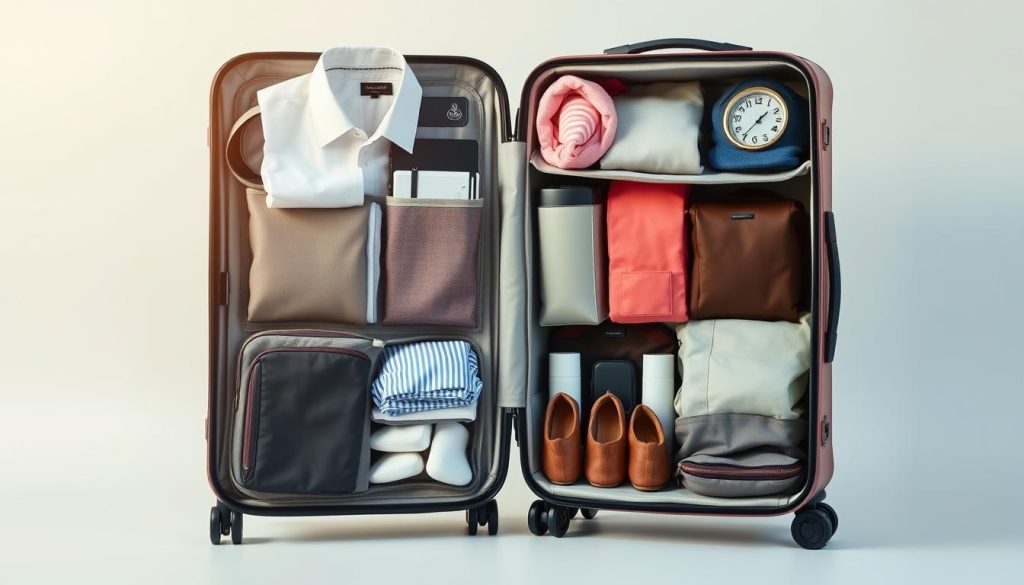
    suitcase compartments

    “A well-organized suitcase can make all the difference in your travel experience. Thoughtful compartments and pockets allow you to keep your belongings tidy and easily accessible.”

    Weight: Lightweight is Best

    Choosing a lighter suitcase is a smart move. Experts say non-wheeled bags should weigh 2 to 4 pounds. Wheeled ones should be under 7.5 pounds. This makes carrying your stuff easier, especially with your packed items.

    Before you go, check your airline’s carry-on weight limits and checked bag weight limits. This way, you won’t face surprise fees.

    Over 600 pieces of lightweight luggage were tested to find the top choices. A carry-on from the review weighed 5.95 pounds and was 21.7 × 14.2 × 7.9 inches big. The most durable one was 6.7 pounds and 21 x 14 x 9.5 inches, with a 38-liter capacity.

    The best expandable carry-on was 6.4 pounds and 23 x 15 x 10 inches big.

    Travelpro® luggage is super tough and comes with a warranty. They use advanced materials like stain-resistant polyester and ballistic nylon for softside bags. Hard shell suitcases are made with scratch-resistant polycarbonate.

    The Maxlite® 5 21″ Expandable Spinner is just 5.4 pounds empty. It’s the only mid-priced lightweight option with a one-year warranty for repairs.

    lightweight luggage

    Smart Features: Connected Capabilities

    Technology is changing the way we travel with smart luggage. Today, connected suitcases have features that make trips smoother and easier. Features like GPS tracking and digital scales are becoming key for those who travel often.

    Convenience at Your Fingertips

    Smart luggage stands out with its location tracking feature. GPS lets you see where your suitcase is, giving you peace of mind. It also means you won’t lose it. Plus, digital scales in the luggage make it easy to check the weight, helping you avoid extra fees at the airport.

    For more security, some connected suitcases have fingerprint locks. These let you open your bag easily and safely. And, built-in power sources with USB ports keep your devices charged while you’re on the move.

    Smart Luggage Feature Benefit
    GPS Tracking Monitor your bag’s location for peace of mind
    Digital Scales Easily check your bag’s weight to avoid fees
    Fingerprint Locks Secure your belongings with a biometric lock
    Power Sources Keep your devices charged on the go

    These smart luggage features cost more, but they’re great for frequent travelers. They make journeys easier and add convenience and security to your trips.

    smart luggage features

    Locks: TSA-Compliant for U.S. Travel

    If you’re flying to, from, or within the United States, you need TSA-compliant locks for your suitcases. These locks have a special key that TSA agents can use to open your bag during checks. This way, they can look inside without breaking the lock. It keeps your luggage safe but lets authorities access it if needed.

    Many luggage brands have TSA-approved locks. They’re made of strong materials like hardened steel or zinc alloy. These locks can handle checked bag inspections and stay strong. Make sure the lock you buy clearly shows it’s TSA-compliant to meet U.S. travel needs.

    Feature Benefit
    TSA-Compliant Design Allows Transportation Security Administration agents to inspect your luggage without cutting the lock
    Durable Construction Withstands the demands of travel and checked bag inspections
    Clear Identification Ensures you’re purchasing the right luggage locks for your U.S. travel needs

    Using TSA-compliant locks means you can travel securely. You’ll still let authorities check your luggage when needed. This easy step makes going through U.S. airports smoother.

    TSA-compliant luggage locks

    Expandability: Extra Space for Souvenirs

    Choosing the right luggage is key for your travels. Expandable hard-shell suitcases are great for extra space. They’re perfect for souvenirs or more items you buy on your trip.

    But, remember, some carry-on size bags get too big when expanded. They might not fit in the overhead bin anymore. If you check your bag, an expandable one can give you the extra room you need.

    • The Away Carry-on Flex can expand its depth by 2.25 inches.
    • The Béis Large Check-in Roller offers a 112-liter capacity and expands 2 inches in depth.
    • The Samsonite Freeform Spinner expands by 2 inches in depth and weighs 5.6 pounds.
    • Travelpro’s Platinum Elite luggage line includes a carry-on and checked bag that expand by 2 inches.
    • The Calpak travel trunk expands by 2 inches and measures 31.5 x 15.5 x 12.5 inches.

    When picking an expandable suitcase, think about what you need to pack and the size limits for carry-ons. The right expandable luggage offers flexibility and convenience for your trips.

    expandable suitcases

    Suitcase buying guide: how to choose the best luggage

    Choosing the right suitcase is key for any traveler. It’s important whether you’re going for a weekend or a long trip. This guide will help you pick the best luggage for your needs and budget.

    Zipper Quality

    The zipper is a crucial part of a suitcase. You should pick one that’s strong and reliable. Chain zippers, made of metal, are better and stronger than coil zippers. YKK zippers are top-notch for their quality and long life.

    Weight Considerations

    Luggage should be light. Experts say non-wheeled bags should be 2 to 4 pounds, and wheeled ones should be under 7.5 pounds. This means the weight you carry is mostly your stuff, not the suitcase.

    Compartments and Organization

    Suitcases with good compartments make packing easy. Look for ones with laptop sleeves, suiter compartments, and many pockets. These features help keep your things organized and easy to find.

    Expandability and Versatility

    Some hard-shell luggage can expand, but an expanded carry-on might not fit in overhead bins. This feature is useful for extra souvenirs or items on the way back.

    Smart Features

    New tech has brought smart features to luggage. These include location tracking, digital scales, fingerprint locks, and power sources. They make traveling easier and keep you connected.

    Keep these factors in mind to find the perfect luggage for your travels. Happy travels!

    suitcase buying guide

    Wheels: Spinners vs. Two-Wheelers

    Choosing the right luggage can really change your travel experience. Suitcases often have either spinner wheels for easy movement or traditional two wheels. Each type has its own benefits, depending on how you travel and what you prefer.

    The Spinner Advantage

    Spinner luggage is now the top choice for many travelers. These wheels make moving around easy, whether you’re in a busy airport or a crowded train station. They let you move in any direction easily, making it less tiring to carry your suitcase.

    Two-Wheelers for Uneven Terrain

    Spinner luggage works great on flat surfaces, but two-wheeled bags are better for rougher ground. They’re perfect for getting over curbs, stairs, and other rough spots. These bags also fit well in overhead bins and are less likely to get damaged.

    Feature Spinner Luggage Two-Wheeled Luggage
    Maneuverability Excellent, with 360-degree rotation Better for navigating uneven terrain and stairs
    Overhead Bin Fit May take up more space due to protruding wheels Recessed wheels allow for a more compact profile
    Durability Susceptible to damage from baggage handlers Rollaboard® wheels are more durable
    Rolling Efficiency Smooth maneuverability in open spaces Larger wheels provide better straight-line rolling

    When picking between spinner luggage and two-wheeled luggage, think about your travel plans and the ground you’ll cover. Spinner bags are great for all-around use, but two-wheelers are better for tough terrain and lots of stairs.

    Storage: Internal and External Pockets

    Packing for your travels can be easier with the right suitcase. Modern suitcases have special pockets for laptops and other devices. They also have zippered pockets and pouches for small items.

    Exterior pockets on soft-sided luggage are very useful. They let you quickly grab things like boarding passes or a spare charger. These pockets help keep your suitcase organized and make your trip smoother.

    Feature Benefit
    Interior pockets Dedicated, padded compartments for laptops and electronics, plus zippered pouches for smaller items
    Exterior pockets Quick access to items needed during travel, such as boarding passes, travel documents, and chargers
    Packing organization Streamlined suitcase storage for a stress-free travel experience

    When picking a suitcase, think about what you need for packing and travel. The right suitcase makes your journey smooth and organized. This lets you enjoy your trip more.

    suitcase storage

    Materials: Hard-Shell vs. Soft-Sided

    Choosing between hard-shell and soft-sided luggage can change your travel experience. Each type has its own benefits. It’s important to think about what you need and what you prefer.

    Durability and Flexibility

    Hard-shell luggage is made of strong materials like polycarbonate or ABS plastic. It’s very durable and protects your things well. Soft-sided bags, made from nylon or polyester, are flexible. This makes them easy to move around in small spaces.

    Packing and Portability

    Hard-shell carry-on bags usually weigh 5 to 10 pounds. Checked bags are a bit heavier, around 9 to 12 pounds. This makes them easy to carry, especially when you’re watching your weight for flights. Soft-sided luggage is even lighter, making it easy to carry around.

    Feature Hard-Shell Luggage Soft-Sided Luggage
    Durability Excellent Good
    Flexibility Limited High
    Weight Heavier Lighter
    Packing Options Clamshell design for easy organization Zippered expansion for extra space
    Exterior Pockets Limited More options

    Choosing between hard-shell and soft-sided luggage depends on your travel needs and what you like. Hard-shell suitcases protect your items well. Soft-sided bags are flexible and versatile. Think about your trip type, how much gear you’re bringing, and how you like to pack to choose the best luggage for you.

    Conclusion

    This suitcase buying guide has covered all the key factors to consider when shopping for new luggage. It looked at zippers, handles, compartments, and weight. By knowing what you need for your travels, you can pick the best suitcase for you.

    Choosing the right carry-on or checked bag can make your trips better. It makes them more organized and fun. This guide’s packing tips will help make your next trip easy, no matter where you’re going or how long you’ll be away.

    There are many options out there, so finding the perfect suitcase is easy. Start your next journey with confidence. Know you have the right luggage to keep your stuff safe and make your trip smooth.

    FAQ

    What key factors should I consider when shopping for a new suitcase?

    When picking a suitcase, think about how you’ll be moving it and how long you’ll be away. Consider the size you need and the features like compartments and wheels. Also, think about your budget to find the perfect suitcase for you.

    Why is the zipper quality important on a suitcase?

    The zipper keeps your stuff safe inside. Chain zippers are stronger and harder to break than coil ones. Look for suitcases with YKK zippers, known for being durable.

    What should I look for in a suitcase handle?

    The handle should adjust and have a soft grip. Handles that hide away are less likely to get damaged. Two-post handles let you carry more bags or totes easily.

    How important is the weight of a suitcase?

    Light luggage is best. Non-wheeled bags should weigh 2 to 4 pounds, and wheeled ones should be under 7.5 pounds. This makes carrying your stuff easier, even with what you’re packing.

    What “smart” features are available on newer suitcases?

    Modern suitcases have cool features like GPS tracking, digital scales, fingerprint locks, and power sources. These add convenience but cost more. They’re great for those who travel a lot.

    Do I need to use TSA-compliant locks on my suitcase when traveling in the U.S.?

    Yes, if you’re flying to, from, or within the U.S., use TSA-compliant locks. These locks let TSA agents check your bag without breaking it. It’s a must for random checks.

    What are the pros and cons of hard-shell versus soft-sided suitcases?

    Hard-shell luggage is tough and protects your things well. Soft-sided bags are flexible and easy to move in tight spots. Think about what you need in protection and ease of use when choosing.

  • Best Time to Travel in United States: Plan Your Trip

    Best Time to Travel in United States: Plan Your Trip

    Find out the best time to visit the United States and make your dream trip come true. This guide covers seasonal highlights, events, and tips for an unforgettable trip. You’ll learn about the best times to visit each region, from the South’s mild winters to the North’s stunning summers.

    Whether you want outdoor fun, city adventures, or family activities, this article has you covered. It gives you the info you need to plan the perfect trip to the United States.

    Key Takeaways

    • Explore the best time to visit different regions of the USA based on weather, events, and optimal conditions.
    • Plan your usa vacation around seasonal highlights, from outdoor adventures to cultural festivals.
    • Discover insider tips to make the most of your usa vacation planning and visit the top destinations in america.
    • Tailor your trip to your interests, whether it’s city breaks, family vacations, or outdoor excursions.
    • Learn about the factors that influence the best time to travel in the United States.

    Factors Influencing the Best Time to Visit the USA

    The United States is huge and has many different climates. The South and Southwest are usually mild and sunny in winter, perfect for being outside. The North and Northeast get cold and snowy.

    Summer is hot in most of the country. But, the North and mountains are cooler. Seasonal events and festivals also help decide the best time to visit. Events like Mardi Gras in New Orleans and St. Patrick’s Day are big draws.

    Regional Climates and Weather Patterns

    The USA climate changes a lot from one place to another. You can find sunny weather in the South and snowy in the Northeast. Knowing the climate helps plan the best time to visit based on climate.

    Seasonal Events and Festivals

    The United States has many seasonal events and festivals. These events can make some times better to visit. For example, Mardi Gras in New Orleans and St. Patrick’s Day celebrations are big events that attract lots of people.

    Month-by-Month Guide for USA Travel

    Planning a trip to the United States? This guide helps you pick the best time to visit. You’ll find mild winters in the South and stunning fall colors in the Northeast. Each month has its own highlights for a great American trip.

    January

    In January, places like Florida, Louisiana, and Texas are warm, with highs of 16–18°C. Visit San Diego or Los Angeles for temperatures around 18-20°C. Don’t miss the San Diego Zoo, with over 3,700 animals.

    For a tropical feel, Hawaii is perfect, with temperatures in the low to mid 20s.

    February

    February sees lows from 4°C in the north to 12°C in the south. Miami is warm, with temperatures of 24-26°C. Check out the vast Everglades National Park, a huge wetland area.

    March

    March brings highs of about 22°C to Florida, attracting spring break crowds. Visit San Francisco for sights like Fisherman’s Wharf and Alcatraz Island. Outdoor lovers should see Yosemite National Park, a huge park with over 4 million visitors a year.

    April

    April sees temperatures from 20°C to 11°C on average. Yellowstone National Park is great for wildlife, with bison and bears. The Midwest, including Chicago and Ann Arbor, is also nice, with temperatures around 15-20°C.

    May

    May is perfect for Yellowstone National Park and Death Valley, with highs of 18–23°C. Don’t miss Seattle, with its Space Needle and Seattle Art Museum.

    Month Destination Highlights
    June Northern National Parks Ideal for Hiking and Wildlife Viewing
    July East Coast Cities Experiencing Warm Temperatures
    August Rocky Mountain Region Moderate Temperatures, Fewer Crowds
    September New England Vibrant Fall Foliage
    October Southwest Ideal for Outdoor Adventures

    This guide shows the best times to visit the United States for different interests. Whether you want outdoor fun, city life, or cultural spots, there’s a perfect season and place for you. Start planning your American vacation now!

    Month-by-Month Guide for USA Travel

    Winter (January – March)

    The winter months in the southern United States are perfect for visiting. The weather is mild and sunny, ideal for outdoor activities. You can enjoy hiking, camping, and water sports without the cold.

    Winter is also the best time for big events that attract people from everywhere. Mardi Gras in New Orleans is a colorful event filled with music, food, and culture. St. Patrick’s Day celebrations happen in many places, with parades and Irish music.

    “The South in winter is a time of mild temperatures, clear skies, and an abundance of outdoor adventures waiting to be discovered.”

    If you want to join in the fun of a Mardi Gras party or explore nature, the southern United States in winter is the place to be. It offers a unique and memorable travel experience.

    Spring (April – May)

    Spring in the northern states of the USA is a great time to travel. The weather gets warmer, and there are fewer people around. This makes it perfect for seeing the beautiful sights and enjoying events without the crowds.

    Places like Washington, Minnesota, and New York have nice weather in spring. Temperatures are in the 60s Fahrenheit, and it can get a bit chilly at night. This mild climate is great for outdoor fun without the summer heat.

    There are many things to do, like hiking in beautiful parks or walking through lively cities. Spring in the northern states is a refreshing way to travel. If you’re thinking about visiting America in spring, April and May are ideal. You’ll enjoy nice weather, fewer people, and lots of activities for a unique trip.

    Northern US spring travel

    Summer (June – August)

    The summer months from June to August are perfect for visiting the northern national parks in the United States. These parks are great for hiking, camping, and seeing wildlife. They offer lots of outdoor fun and stunning natural beauty.

    Visiting these parks in the summer means you can easily get around on trails and roads. In winter, many areas are snowy. But in summer, you can explore the parks’ beautiful landscapes and attractions without trouble.

    Northern National Parks in Summer

    Summer does mean more people visit these parks. But planning ahead and booking early can help you avoid the crowds. You can still have a peaceful time. The northern national parks in the summer travel usa are ideal for breathtaking views, wildlife spotting, or unforgettable adventures.

    Hiking and Wildlife Viewing in the Northern National Parks

    Summer is the best time to visit these parks because the weather is warm and everything is in bloom. You can go hiking and see wildlife in these beautiful places. You might see animals like bison or wolves.

    • Explore Glacier National Park in Montana, where you’ll find over 1,000 species of plants and animals.
    • Hike through ancient forests in the North Cascades National Park in Washington. You might see black bears and mountain goats.
    • See grizzly bears in their natural habitat at Denali National Park in Alaska. It’s one of the best places in the U.S. for this.

    If you love hiking or just want to enjoy nature, the northern national parks in the summer travel usa are perfect. They offer many chances for outdoor fun and connecting with nature.

    Fall (September – October)

    September and October are great months to visit the United States. The changing leaves create a stunning fall foliage scene, especially in the Northeast and Midwest. The weather is mild, perfect for outdoor fun and sightseeing without the summer heat.

    Travelers can save a lot during the autumn travel in usa. Airfare drops by about 30% from summer to these months. Flights to places like Orlando, Miami, and Europe can be over $100 cheaper. Cruise prices for New England and Canada trips can go as low as $55 per person, per night. This makes it a great time to see the best time to visit usa in fall.

    The weather is lovely in many places during this season. In the Northeast, September is warm with temperatures between 60-70°F (15-21°C). By November, it cools down to 40-50°F (4-10°C). The Southeast is warmer, with September highs of 75-85°F (24-29°C) and November highs of 55-65°F (13-18°C). The mix of nice weather and beautiful fall colors is ideal for outdoor fun and sightseeing.

    fall foliage

    Autumn in the United States is perfect for enjoying vibrant colors, outdoor activities, or saving money. With fewer people around and pleasant weather, autumn travel in usa is a great way to see the country’s beauty and culture.

    Peak Travel Season: Cons and Pros

    Visiting the United States in the summer can be both fun and challenging. The weather is warm, perfect for outdoor fun and seeing sights. But, there are downsides to consider too.

    One big plus is the many events and festivals. You can enjoy the Mardi Gras in the South or summer concerts and cultural events. The warm weather is great for exploring national parks, hiking, and water sports.

    Advantages of Peak Season Travel Disadvantages of Peak Season Travel
    • Warm, sunny weather for outdoor activities
    • Abundant events and festivals
    • Longer daylight hours for sightseeing
    • Higher prices for flights, accommodations, and attractions
    • Larger crowds and longer wait times at popular destinations
    • Limited availability of accommodations and transportation

    But, the peak season has its downsides. Flights, hotels, and attractions cost more, and spots fill up fast. Expect big crowds, which means longer waits and crowded places.

    Whether to visit during the peak season depends on what you want. If you love lively events and good weather, it’s great. But, if you prefer fewer people and lower prices, consider the shoulder or off-peak seasons.

    peak travel season usa

    “The peak travel season in the United States is a double-edged sword. It offers the best weather and most vibrant experiences, but also the highest prices and largest crowds. Careful planning can help travelers make the most of this popular time to visit.”

    Best Time to Travel in United States by Region

    The United States is a vast and diverse country, offering a wide range of experiences for travelers. When planning your trip, it’s important to consider the best time to visit each area based on its unique climate and seasonal offerings. Here’s a closer look at the optimal travel seasons for different regions across the country.

    Northeast

    The Northeast is known for its distinct four seasons, each with its own charm. The best time to visit the Northeast is during the spring and fall months. These seasons have mild temperatures and fewer crowds. Spring brings blooming flowers and budding foliage. Fall showcases stunning autumn colors that attract visitors worldwide.

    Winter is great for skiing and snowboarding. Summer offers outdoor adventures and coastal exploration.

    Southeast

    The Southeast region of the USA enjoys a long warm season, perfect for beach vacations and outdoor activities. Spring and fall are pleasant with mild temperatures and lower humidity. Summer can be hot and humid, but the region’s natural attractions and cultural events make it appealing.

    Midwest

    The Midwest region of the United States has distinct seasons, each offering unique experiences. Spring brings blooming landscapes and comfortable temperatures. Summer is ideal for outdoor adventures and agricultural tourism.

    Fall showcases vibrant foliage. Winter can be cold but offers winter sports and cozy indoor activities.

    Southwest

    The Southwest region of the USA has a dry, desert climate, making it a year-round destination. Spring and fall are pleasant with mild temperatures and lower humidity. Summer is hot, but the region’s natural landscapes and cultural attractions draw visitors.

    West Coast

    The West Coast of the United States has diverse climates and landscapes, from temperate coasts to arid interiors. Summer is best for warm, sunny weather and fewer crowds. However, coastal areas may have cooling fog.

    Spring and fall are great for exploring the West Coast with mild temperatures and fewer tourists.

    best time to visit northeast us

    Region Best Time to Visit Top Attractions
    Northeast Spring and Fall New England fall foliage, skiing, coastal exploration
    Southeast Spring and Fall Beach vacations, outdoor activities, cultural events
    Midwest Spring and Summer Blooming landscapes, outdoor adventures, agricultural tourism
    Southwest Spring and Fall Stunning natural landscapes, cultural attractions
    West Coast Summer Warm, sunny weather, coastal exploration

    Best Time for Outdoor Adventures in the USA

    The United States is full of outdoor adventures. You can hike, camp, enjoy water sports, or go on beach vacations. The best time depends on where you go and what you like to do.

    Hiking and Camping

    Spring and fall are the best times for hiking and camping in the USA. These seasons have mild weather and fewer people. This makes it perfect for those who love the outdoors. In the north, May has an average temperature of 15°C (60°F). In the center, July averages 27°C (80°F).

    Water Sports and Beach Vacations

    For water sports and beach trips, summer is the best season. The south has temperatures from 20°C to 28°C (68°F to 82°F) in spring. Autumn brings a drop to 31°C to 19°C (88°F to 66°F). Summer in the south reaches a comfortable 27°C (80°F), ideal for the coast and water activities.

    There’s a perfect time for everyone to enjoy the USA’s outdoors. Knowing the seasons and climates helps plan your trips. This way, you can find the best time for hiking and camping in usa and the when to go for water sports and beach trips. It ensures an amazing outdoor activities by season experience.

    Outdoor activities in USA

    Region Best Time for Outdoor Adventures
    Northern USA May to June
    Southern USA March to May, September to November

    Best Time for City Breaks in the USA

    The United States has many vibrant cities, each with its own charm. The best time to visit is usually spring and fall. These seasons have nice weather and fewer people, unlike the busy summer.

    This allows visitors to see famous spots, dive into local culture, and enjoy the city’s pace. For example, you might spend 3 days in Boston, 4 in New York City, 3 in Philadelphia, and 3 in Washington, DC.

    New York City is huge and full of things to see. October is the best month to visit for its great weather and fall colors.

    Fall is the best time for New York because of the nice weather, fewer people, and lower prices. Winter gets very cold, often below freezing in January.

    Asheville, North Carolina, is famous for its craft beer and hipster cafes. It’s in the Blue Ridge Mountains, just a few hours from Washington, DC. Near the Great Smoky Mountains, it has great hiking trails. These are best explored overnight.

    “Fall showcases the best of New York with comfortable temperatures, clear skies, colorful foliage, limited rain, smaller crowds, and an abundance of unique local experiences.”

    When planning your trip, think about the weather, events, and activities you want to do. The shoulder seasons are great for exploring cities like New York City, Asheville, Boston, and Washington, DC. They offer a perfect balance for a city trip.

    city break in america

    City Recommended Travel Period Key Attractions
    New York City Fall (late September to early November) Central Park, Times Square, the Metropolitan Museum of Art, Broadway shows
    Asheville, North Carolina Spring (April to May) and Fall (September to October) Blue Ridge Parkway, the Biltmore Estate, craft breweries, outdoor activities in the Great Smoky Mountains
    Boston, Massachusetts Spring (April to May) and Fall (September to October) Freedom Trail, Harvard University, Museum of Fine Arts, New England cuisine
    Washington, DC Spring (April to May) and Fall (September to October) National Mall, Smithsonian museums, the White House, monuments and memorials

    Best Time for Family Vacations in the USA

    Planning a family travel in usa depends on your family’s ages and interests. Summer is popular with warm weather and school breaks. But, spring and fall are great too for when to plan a family vacation in america.

    Spring and fall have fewer people, nice weather, and many kid-friendly destinations. This makes vacations more fun and relaxing.

    Destinations for Families

    • Orlando, Florida is the theme park capital with parks like Walt Disney World and Universal Orlando Resort.
    • Washington, D.C. has 19 free Smithsonian museums, making it a budget-friendly spot for families.
    • Wisconsin Dells, Wisconsin is known as the “Waterpark Capital of the World” with lots of waterparks.
    • Yellowstone National Park in Wyoming lets families see geysers, hike trails, and watch wildlife.
    • Traverse City, Michigan is famous for its lakes and vineyards.
    • Martha’s Vineyard in Massachusetts is lively in summer with beautiful beaches and villages.
    • Gatlinburg, Tennessee has mountains, trails, museums, aquariums, and water parks for fun.
    • Grand Canyon National Park in Arizona has hiking trails, rock formations, and amazing views.
    • Portland, Oregon is the “City of Roses” with a famous rose garden.
    • Santa Fe, New Mexico offers landscapes, Pueblo homes, museums, and historic sites for a cultural trip.

    Every season, families can discover many kid-friendly destinations in the United States for memorable trips.

    family travel in usa

    Conclusion

    Planning a trip to the United States means looking at many things. You need to think about the weather, special events, what you like, and your budget. Knowing when and where to go can make your trip amazing and fit what you want.

    This guide has given you tips and advice for planning your dream trip in the United States. You can explore the country’s vibrant culture, see its natural beauty, try different foods, and meet locals. The U.S. has a lot to offer for a great travel experience.

    Remember the main points for planning a trip to America, like knowing the best times to visit. This way, you can make smart choices and enjoy your trip more. With good planning and a desire to try new things, you’ll make memories that will stay with you forever.

    FAQ

    What are the key factors that influence the best time to visit the USA?

    The best time to visit the USA depends on the weather and seasonal events. These include the climate, weather patterns, and festivals across the country.

    What are the highlights of visiting the USA during different seasons?

    In winter, the South has mild weather. Spring and fall bring pleasant temperatures and fewer people to the North. Summer is great for national parks and outdoor fun.

    What are the advantages and disadvantages of visiting the USA during the peak travel season?

    Summer is warm and perfect for outdoor fun. But, it’s also more expensive, crowded, and places might be hard to get into.

    How does the best time to visit the USA vary by region?

    The best time to visit changes a lot by region. The Northeast and Midwest have clear seasons. The Southwest is good all year.

    What are the best times for outdoor adventures and city breaks in the USA?

    Spring and fall are great for hiking and camping. These seasons also make for nice city breaks with good weather and fewer people.

    When is the best time to plan a family vacation in the USA?

    Summer is popular for family trips with warm weather and outdoor fun. But, spring and fall are also good. They have fewer people and lots of family-friendly events.

  • Discover the Best of Travelling in America

    Discover the Best of Travelling in America

    Imagine starting a journey through the diverse landscapes and cities of the United States. This country offers endless unforgettable experiences. But where do you start? How can you find the true essence of this vast land?

    This guide will show you the hidden gems and famous spots that make America a unique adventure. You’ll see the historic East Coast and the stunning West’s natural wonders. The USA has something for every traveler, from classic road trips to outdoor adventures and city breaks.

    Key Takeaways

    • Uncover the diverse landscapes, vibrant cities, and cultural experiences that make the United States a must-visit destination
    • Explore the historic charm of the East Coast, the stunning natural wonders of the West, and the lively urban centers in between
    • Discover the perfect blend of iconic attractions and off-the-beaten-path gems to create an unforgettable American adventure
    • Tailor your trip to your interests, whether it’s a classic road trip, outdoor escapades, or immersive city breaks
    • Plan your journey with insider tips and practical information to make the most of your time in the USA

    The Great American Road Trip

    east coast road trip

    The open road has always called to American travelers. From the famous Route 66 to the stunning Pacific Coast Highway, road trips are a key part of the American dream. You can explore the east coast‘s charm, dive into the southern US‘s culture, or enjoy the beauty of scenic drives and national parks. The options for an amazing road trip are endless.

    An Epic Four-Month Itinerary

    We’ve put together a four-month plan for the ultimate American road trip. It covers the country’s varied landscapes, historic sites, and lively cities. This plan is great whether you’re going all in or focusing on certain areas. It’s a solid base for your own epic journey.

    Month 1: East Coast, Southern US

    Start your trip by checking out the east coast and the southern US. Kick off in Boston, where you can dive into colonial history and enjoy the famous seafood. Then, head to New York City for a taste of the “City that Never Sleeps.”

    Next, visit Philadelphia for its colonial vibe and Washington D.C., the heart of politics. As you move south, stop by the Shenandoah National Park in Virginia for outdoor fun. End your first month in Asheville, North Carolina, with its great craft beer and beautiful mountain trails.

    Destination Highlights
    Boston, MA Historic charm, seafood delights
    New York City, NY The city that never sleeps
    Philadelphia, PA Colonial history
    Washington D.C. Political heart of the nation
    Shenandoah National Park, VA Outdoor adventures
    Asheville, NC Craft beer, mountain trails

    This first month of your road trip through the east coast and southern US mixes historic sites, lively cities, and beautiful nature. It’s a great start to an unforgettable American journey.

    Iconic American Destinations

    boston and new york city

    America is full of iconic places that draw in travelers from everywhere. This section focuses on two famous cities: Boston and New York City.

    Boston, MA: Historic Charm and Seafood Delights

    Boston is a key spot in the American Revolution’s history. Visitors can explore the Freedom Trail, chill in Boston Common, and see amazing architecture. It’s famous for its seafood, like fresh lobster, clam chowder, and oysters.

    Boston also has a lively culture scene. The Museum of Fine Arts and the Isabella Stewart Gardner Museum have amazing art. The city’s theaters and music venues host top-notch performances.

    New York City, NY: The City That Never Sleeps

    New York City is just a few hours south of Boston. It’s a bustling place with lots of culture, museums, and things to do. The city’s skyline and trendy Brooklyn neighborhoods make it unforgettable.

    Places like the Statue of Liberty, Central Park, and the Empire State Building attract many visitors. The Broadway shows, great restaurants, and busy streets are exciting. New York City has something for everyone, from art to music to the city buzz.

    “New York is an ugly city, a dirty city. Its climate is a scandal, its politics are used to blackmail, its traffic is madness, its competition is murderous. But there is one thing about it – once you have lived in New York and it has become your home, no place else is good enough.” – John Steinbeck

    Philadelphia and Washington D.C.: Colonial History

    colonial history

    Next, we head to Philadelphia and Washington D.C. These cities were key in the nation’s early days. Philadelphia is known for its colonial sites like the Liberty Bell and Independence Hall. This is where the Declaration of Independence and the Constitution were signed.

    In Washington D.C., you’ll find many free museums and monuments. They celebrate America’s history and its democratic values. Places like the Smithsonian Institution and the Lincoln Memorial let you explore the nation’s early years and its democratic growth.

    George Washington traveled a lot in the young United States. He went from New England to Georgia and even to the Ohio Valley. At sixteen, he went on his first big trip in Virginia with a surveying party.

    He kept exploring Virginia, West Virginia, Pennsylvania, and Ohio as a surveyor and soldier. In the 1770s, he made trips to the west and Philadelphia. He was there for the First and Second Continental Congresses.

    “In the 1770s, Washington resumed traveling with trips to the western lands and Philadelphia, where he attended the First and Second Continental Congresses.”

    As the head of the Continental Army, Washington moved from Rhode Island to Yorktown, Virginia, during the war. He was at the Constitutional Convention in Philadelphia in 1787. He also went to New York for his first presidential inauguration in 1789.

    Destination Distance from Washington D.C. Recommended Duration
    Philadelphia, Pennsylvania 140 miles or 2 hours and 39 minutes 2-3 days
    Lexington Battle Green, Massachusetts About 40 minutes from Boston 1-2 hours
    West Point, New York On the way between Boston and New York 1-2 hours

    This tour covers 963 miles and stops in 8 cities, including Washington, D.C., Gettysburg, Shenandoah, Charlottesville, Colonial Williamsburg, Norfolk, Virginia Beach, and Baltimore. It’s a deep dive into the nation’s colonial past and its democratic growth.

    Natural Wonders: Shenandoah and the Blue Ridge Mountains

    Shenandoah National Park

    The journey takes you from historic East Coast cities to stunning natural landscapes. Shenandoah National Park is just west of Washington D.C. It has over 500 miles of trails and amazing views of the Appalachian Mountains.

    Shenandoah National Park, VA

    Shenandoah National Park has a rich history, dating back over 8,000 years. It’s full of natural treasures like the famous Skyline Drive. This 105-mile scenic road goes through the park. You can see deer, foxes, and black bears there.

    For those who love hiking, there are over 500 miles of trails. They range from easy walks to tough climbs like the Dragon’s Tooth hike.

    The park also has amazing geological formations and natural wonders. Crabtree Falls is the highest waterfall east of the Mississippi River. Dark Hollow Falls is another beautiful spot, just a 0.75-mile hike away.

    Asheville, NC: Craft Beer and Mountain Trails

    In Asheville, North Carolina, you’ll find a great base for exploring nature. It’s famous for its craft beer and tasty regional cuisine. It’s also close to the Great Smoky Mountains and the Blue Ridge Parkway, a scenic road through the Appalachian Mountains.

    There are many hikes around Asheville, like the tough McAfee Knob or the easier Roaring Run Falls and Devil’s Marbleyard trails. These spots let you enjoy the outdoors and see the beauty of the American landscape.

    “Shenandoah National Park boasts more than 100 miles of scenic Skyline Drive, offering breathtaking vistas of the Appalachian Mountain range.”

    Travelling in America: The Ultimate Bucket List

    Route 66 road trip

    No trip to the United States is complete without experiencing some of its top bucket list activities. At the top is the famous Route 66, a historic road trip from Chicago to Santa Monica, California. It’s filled with quirky roadside spots, old motels, and beautiful nature.

    Route 66: The Classic American Road Trip

    Route 66 stretches 2,278 miles across eight states, making it a symbol of American travel. It’s best to take this classic road trip over four weeks. Aim to drive no more than six hours a day to really get into the spirit of the journey.

    The best times for a Route 66 trip are spring and autumn. The weather is mild, perfect for exploring.

    • Route 66 is 2,278 miles long and takes around 46 hours of total driving time.
    • Advised to allocate at least 4 weeks to enjoy the Route 66 road trip.
    • When planning a Route 66 trip, it is recommended not to drive for more than 6 hours a day.
    • Spring and autumn are the best times to plan a road trip along Route 66.

    Statue of Liberty and New York City Highlights

    On the East Coast, visiting the Statue of Liberty and New York City highlights is a must. You’ll see Central Park, the 9/11 Memorial, and the High Line. Climbing to the Statue of Liberty’s crown is a challenge, with 146 steps and 44 more in a spiral staircase. Plan to spend 5-6 hours to see both the Statue of Liberty and Ellis Island.

    “These bucket list experiences exemplify the diverse wonders that make travelling in America so captivating.”

    Exploring the Wild West

    Zion National Park

    As you move from the East Coast to the Southwest, the “Wild West” calls you. This is especially true in Los Angeles, the heart of entertainment. Walk down Hollywood Boulevard and dive into the sparkle of Tinseltown. See the famous handprints at Grauman’s Chinese Theatre and feel the magic that draws people in.

    The real spirit of the Wild West is in its stunning natural beauty. Zion National Park in Utah shows off the amazing sandstone canyons and landscapes. Hike through huge rock formations, admire the detailed rock walls, and get lost in the park’s beauty.

    These places mix city life with nature’s wonders, showing the American West’s diverse spirit. Whether you want the excitement of Hollywood or the beauty of nature, this area promises an experience you won’t forget.

    Hollywood Boulevard, Los Angeles

    Walking down Hollywood Boulevard in Los Angeles is a must for visitors. Dive into the history and modern charm of this famous spot. You’ll see the famous Grauman’s Chinese Theatre and the Hollywood Walk of Fame. See the handprints and footprints of famous actors and actresses, and step where your favorite stars did.

    There’s more to Hollywood Boulevard than its glamour. It’s full of shops, restaurants, and street performers, creating a lively scene. Feel the excitement of this famous area and get a taste of the entertainment industry’s magic.

    Zion National Park, Utah: Sandstone Canyons

    Head into the American Wild West and check out Zion National Park in Utah. This place is known for its stunning sandstone canyons and landscapes. It’s a favorite among adventurers and nature lovers.

    Hike through huge rock formations, taking in the detailed and colorful walls. See the amazing scale of landmarks like Angels Landing and Emerald Pools. Zion National Park has adventures for everyone, from tough hikes to easy walks. It’s a celebration of the natural wonders of the American West.

    “Zion National Park is a place of supreme majesty and beauty, a true marvel of nature that leaves a lasting impression on all who visit.” – John Muir, renowned naturalist and conservationist

    Regional Highlights: East Coast to the Southwest

    Southwest region

    Traveling from the East Coast to the Southwest, you’ll see a mix of regional highlights. These show the cultural diversity, culinary traditions, and outdoor recreation of the United States. You’ll find historic charm on the East Coast and rugged beauty in the Southwest. Each place has its own special character and experiences.

    In the Southwest, this area is known as the USA’s most stunning. It has amazing desert views and cliffs and canyons. People have been exploring it for over 25 years. It still amazes visitors with its incredible natural sights.

    • Saguaro National Park near Tucson lets you walk among huge saguaro cactuses.
    • White Sands National Monument in southern New Mexico has dunes made of fine gypsum that look like snow.
    • Monument Valley shows a classic Wild West scene with tall buttes and rock shapes.
    • Horseshoe Canyon has amazing rock art that you can only get to by a long desert walk.
    • Zion National Park in southern Utah is known for its red rocks and a green oasis in Zion Canyon.

    The Southwest is not just about nature. It’s also full of cultural diversity and culinary traditions. Acoma Pueblo, near Albuquerque, shows a thousand years of Native American history. Historic hotels like the Strater in Durango and La Fonda in Santa Fe let you see the area’s past.

    Whether you’re checking out Miami’s art deco, Asheville’s craft beer, or the Southwest’s unique rocks, this part shows the amazing diversity of travelling in America. It makes exploring the country a rich and fulfilling journey.

    National Parks and Natural Treasures

    national parks

    The United States is filled with stunning national parks and natural wonders. These places have amazed visitors for many years. Yellowstone, Yosemite, and the Grand Canyon are top spots to experience America’s beauty outdoors.

    Yellowstone: A Geothermal Marvel

    Yellowstone, the world’s first national park, is famous for its geothermal wonders. It has the famous Old Faithful geyser and the beautiful Grand Prismatic Spring. It’s in Wyoming, Montana, and Idaho, with lots of wildlife like bison and grizzly bears.

    Yosemite: A Granite Wonderland

    Yosemite National Park is in California’s Sierra Nevada mountains. It’s a natural wonder with huge granite cliffs like El Capitan and Half Dome. You can see amazing waterfalls and forests of ancient sequoia trees.

    The Grand Canyon: A Geological Masterpiece

    The Grand Canyon in Arizona is one of the world’s most stunning sights. It shows the Earth’s history in a huge way. The canyon’s rocks in red, orange, and brown are a sight to see. It’s perfect for outdoor adventures and views.

    These parks show the USA’s effort to protect nature. They invite us to enjoy the beauty and power of nature away from daily life.

    National Park Key Highlights Size (Acres)
    Yellowstone Geothermal features, diverse wildlife 2.2 million
    Yosemite Towering granite cliffs, waterfalls, sequoia forests 748,436
    Grand Canyon Breathtaking geological formations, outdoor adventures 1.2 million

    “The Grand Canyon is the one great sight which every American should see.”
    – Theodore Roosevelt

    Conclusion: An Unforgettable American Adventure

    Starting a trip across the U.S. means you’re in for an adventure full of unforgettable moments. You’ll dive into the country’s deep culture and history. From the East Coast’s historic spots to the Wild West’s stunning landscapes, there’s so much to see.

    If you want a classic road trip, outdoor fun, or city life in places like New York or Los Angeles, the U.S. has it all. You’ll find amazing natural sights, lively local traditions, and a history that’s both deep and rich. This country is calling you to start an adventure that will touch your heart and mind deeply.

    Getting ready for your trip? Keep an open mind and a spirit of adventure. With good planning, a reliable car, and a positive attitude, you’re set to discover the real America. You’ll make memories that will change how you see the U.S. and its varied culture forever.

    FAQ

    What are some of the top destinations for travelling in America?

    Top spots for traveling in America include Boston, New York City, Philadelphia, and Washington D.C. Shenandoah National Park, the Blue Ridge Mountains, and Route 66 are also must-sees. Don’t miss Los Angeles, Zion National Park, Yellowstone, Yosemite, and the Grand Canyon.

    How long does the “Great American Road Trip” itinerary last?

    The “Great American Road Trip” is a four-month adventure. It covers the East Coast, the Southern US, and the American Southwest.

    What are some of the highlights of the East Coast and Southern US portion of the road trip?

    The first month takes you through the East Coast and Southern US. You’ll visit Boston, New York City, Philadelphia, Washington D.C., Shenandoah National Park, and Asheville, North Carolina. Enjoy colonial history, vibrant cities, and the stunning Blue Ridge Mountains.

    What makes Boston and New York City such iconic American destinations?

    Boston is where the American Revolution began. You can walk the Freedom Trail, relax in Boston Common, and try the famous seafood. New York City is a bustling metropolis with cultural diversity, world-class museums, and a vibrant nightlife. Explore from Central Park to the Statue of Liberty.

    What natural wonders can be found in the Shenandoah National Park and the Blue Ridge Mountains?

    Shenandoah National Park has over 500 miles of trails and stunning views of the Appalachian Mountains. Asheville, North Carolina, is a great place to stay, with its craft beer scene and the Great Smoky Mountains nearby.

    What are some of the must-do bucket list experiences for travelling in America?

    Don’t miss driving on historic Route 66, visiting the Statue of Liberty, and exploring New York City. Also, experience the glamour of Hollywood in Los Angeles.

    What makes the American West so captivating for travellers?

    The American West combines city life with nature’s beauty. Los Angeles offers excitement, while Zion National Park in Utah shows off dramatic sandstone canyons and iconic landscapes.

    What are some of the most renowned national parks and natural treasures in the United States?

    Yellowstone, Yosemite, and the Grand Canyon are famous for their geothermal features, towering cliffs, waterfalls, and vast beauty.

  • American Food and Culture

    FOOD AND CULTURE IN UNITED STATES OF AMERICA

    When it comes to the American food and culture, it is for good reason that Israel Zangwill’s term “Melting Pot” for the name of a play in 1908 still serves as an apt description of the United States today. The United States is a nation of immigrants, each ethnic group retaining customs, festivals and food traditions with great pride and yet with a stamp that is unmistakably American.

    Huge areas of fertile land, abundant natural resources, and some of the world’s most advanced technology, marketing and transportation systems combine to give the United States one of the highest living standards in the world. Immigrants to America were dazzled by the space, opportunities, freedoms and diversity of things around them. Their glowing letters sent home spoke more of “you can get anything here!” than of the hard struggle to get ahead in a new land and often with a new language.

    Though a visitor to the U.S. may conclude that the country’s staple foods are hot dogs, hamburgers and french fries, washed down with soft drinks and topped off with ice cream, a more careful examination reveals regional as well as ethnic specialties.

    The first generation of European immigrants had little time for Old World traditions. Making a living, creating a home and raising a family were the realities of everyday life. Food was whatever was available and affordable to fill an empty stomach. But as they became established, the newcomers found solace in grouping together in neighborhoods where the familiar languages, customs, and compatriots gave them strength for whatever the future might hold. It was good to share a glass of homemade wine, a pint of beer, or a schnapps. It was comforting to smell the familiar scents of cooking and baking and, even better, to drown a day’s hard work in a homey soup or familiar stew. Adapting available foods to familiar recipes helped a little to make them feel at home.

    But long before all the others, Aboriginal peoples, whose ancestors had probably crossed the Bering Strait thousands of years before the European had even heard of America, made their way southward in the great continent, founding villages and developing languages and social systems and adapting to the land in unique and often ingenious ways.

    It was from the Indians that the earliest pioneers learned how to prepare such staples as corn, tomatoes, squash, peanuts, pumpkin, tobacco, turkeys, wild rice, pumpkins and squash, and even to tap wild maple trees for sweet maple syrup. In order to avoid cooking on the sabbath, the Puritans adopted the Indian clambake technique and used it to make slow-simmered beans cooked in the Indian way (today called New England baked beans) using a sealed bean pot buried overnight in a pit of embers. In its modified version – slow-baked overnight in the oven – it is enjoyed to this day.

    As the pioneers settled into the land, they adapted the ethnic foods they brought with them to the new and different produce that was so plentiful. Ethnic foods melded into regional specialties, and although few writers dare to define the exact borders of these regions, distinctive ways of preparing, cooking, combining, seasoning, and even serving foods do exist.

    Still another powerful influence came to America through the Atlantic slave trade from West African countries to the New World. The West African slaves adapted many New World foods to their own basic methods of frying, stewing, and preparing sauces for enhancing simple food. They introduced many flavorful, healthy varieties of greens to the European diet. They added grilled meats, wrapped foods in cabbage leaves (instead of banana leaves) for roasting in fires, and turned many of their own classic dishes like rice and black-eyed peas into Southern traditions like Hoppin’ John. The use of a baffling array of peppers, spices, roots, tubers, and greens, and the skillful metamorphosis of every part of the pig or chicken into delectable morsels of food are all now imbedded not only in America’s cuisine, but also in the cuisines of many Caribbean countries and Brazil.

  • Food in Hawaii and Alaska

    HAWAIIAN AND ALASKAN FOOD

    The two youngest states of the United States bring an offering of contrasts to the huge American table of foods. Hawaii offers touches from the South Pacific and Southeast-Asian cuisine like the sharp salty fish sauces, exotic spices, an array of tropical fruits such as taro, coconut, passion fruit, guava, tangy-sour tamarind, as well as noodles, rice, pork, seafood and raw fish.

    Hawaiian specialties include Pupus, fried or grilled snack foods or appetizers, which includes Crab Rangoon (hot spicy crab meat sealed in crispy fried won ton wrappers) and Rumaki which features grilled skewered chicken livers and water chestnuts wrapped in bacon. Bagoong, a salty fish sauce, is often used as a condiment and seasoning.

    Perhaps the most famous festive occasion is the Luau during which a whole pig is cooked in a pit (Imu) heated with white-hot rocks. Lomi Lomi Salmon, tender and juicy salt fish prepared with a mixture of tomatoes and onions, often served with Poi. A meal might end with Haupia, a sweet pudding made from coconut milk or feature Mai Tai, a heady Hawaiian drink prepared with rum, orange-flavored liqueur and lime juice.

    Together with the bounty of nature – cloudberries, rose hips, blueberries, cranberries, salmonberries, huckleberries, rhubarb, fish and wild game (beaver, bear, venison, caribou, duck and ptarmigan) the early Alaskan pioneers brought two staples that still satisfy hearty appetites in the North. These are pork and beans and the famed sourdough from which breads, rolls, pancakes and biscuits are made. The sourdough starter – a ferment of flour, yeast, and water – when once begun, lives in a crock in the kitchen, continually added to and a constant source of new doughs with a tantalizing aroma and taste. Sourdough Cakes are made by adding a little baking soda to a sourdough sweetened with sugar and baked on a griddle.

    The native peoples taught the early trappers and miners how to prepare rolled sheets of dried berries. They also patiently shared their skills for salting, drying and smoking fish to last over the winter, and even how to keep sun-dried berries in airtight containers. The toasted seaweed that they crumbled over fish soap added a salty taste and valuable nutrients.

    Alaskan specialties include Matsuki, only one of countless varieties of edible wild mushrooms, Watapoo, a mealy red tuber with a taste similar to chestnuts and Camas, a starchy bulb-shaped considered a staple wilderness food.

  • Foods of Southern and Southwestern American Region

    AMERICAN FOODS OF SOUTHERN AND SOUTHWESTERN REGION

    American Southern Regions Foods

    “Take two and butter ’em while they’re hot!” refers to the southern predilection for a variety of delicious home-baked hot breads and beaten biscuits, which are eaten at almost every meal. As famed as southern hospitality are Virginia ham, southern fried chicken, hog’n hominy (pork and pork products served with corn grits), cornbread, hoecake and compone and a delectable array of desserts like tifle, Sally Lunn, Tipsy Pie, pecan pie and George Washington cake.

    Many specialty dishes of African-Americans, enjoyed as “soul food” originated from the humble foods served with imagination by the early West African slaves. Well-cooked greens of all types, wild and cultivated, such as kale, collard and mustard greens, and chicory are enhanced with bits of salt pork, bacon fat or pig’s innards, hocks or ears. Other dishes include those made with pork and chicken. Melons are the favored fruits, eaten sweet, juicy and fresh.

    Specialties in the southern states include Hush Puppies, cornbread batter fried to golden crunchy perfection and Southern Spoon Bread prepared with white cornmeal and separated eggs baked high and fluffy, not unlike a souffle. In fact, it is so delicate, it requires a spoon to eat.

    Beaten Biscuits with their silken texture are a Southern specialty properly served cold, split and filled like sandwiches. The ingredients are simple, just flour, lard, milk and salt. The trick is in the lengthy kneading or beating with a wooden rolling pin till the dough blisters. Then it is rolled out, cut in rounds and pricked with a fork before baking.

    Southern Fried Chicken is famous across the United States but likely no two recipes are identical, and even the exact technique is dependent on location and tradition. Seasoned and floured chicken pieces may be browned in a skillet or deep fried.

    Texas Barbecue Lima Beans are often served with barbecues. Cooked lima beans are layered in a casserole with a thick spicy tomato sauce laced with grated cheese. More cheese tops the casserole before it is baked till bubbly.

    Candied Sweet Potatoes: In the South, ‘potato’ means yams, white ones are called Irish potatoes. Cooked potatoes are tossed in a skillet of bubbling butter and brown sugar. When glazed and heated, they are served, usually with ham. The same meal might feature Vegetable Scrapple, finely chopped cooked vegetables are stirred into cooked white cornmeal, then smoothed into a loaf pan, chilled, sliced thickly and browned in butter.

    On a lighter note there is Shortn’n Bread, rich tender cookies made with flour, butter and light brown sugar. The traditional Christmas dessert Ambrosia is prepared with oranges, bananas or pineapple sprinkled with sugar and freshly grated coconut (if available) then chilled.

    In the hot southern climate cool drinks are always welcome. Raspberry Shrub, a classic Southern summertime drink, is prepared from homemade raspberry syrup sharpened with cider vinegar. The syrup may be diluted before serving over crushed ice. An Orange Julep features orange juice, lime juice and sugar, carbonated water and ice, garnished with fresh mint and usually served with bourbon.

    American Southwestern Region

    Strongly influenced by traditional Mexican and Spanish cookery, tamales, tacos, enchiladas, frijoles all vie with local tropical and semi-tropical fruits and vegetables to create an usual and distinctive cuisine.

    The influence of the Hopi, Pueblo and Papago Indians have also helped to make beans, squash, chili peppers, and corn staples of the southwestern diet. The famed Texas chili contains no beans but is a slow-simmered stew of diced beef flavored with a mix of seasoning now known simply as “chili powder” (actually a combination of oregano, hot and sweet peppers, cumin, sugar and paprika) thickened traditionally with the same corn flour (masa harina) used to make tortillas. Chili is popularly served with a side dish of Texas beans, a hearty casserole of kidney,or pinto beans simmered in water with onions and garlic.

    Blessed with a mild climate and fertile soil and encouraged by efficient irrigation systems, California enjoys a diverse cuisine and is usually in the forefront of food trends. An emphasis on fresh fruits and vegetables and simplicity in food preparation have always marked California cooking. Yet there is also a flare for the setting, for the presentation and for the combination of ingredients that somehow distinguishes California food traditions.

    Barbecues are the specialty of southern Californians. Grilled meats, fish and seafood are often accompanied with a choice of several salads as well as tacos, enchiladas, caramel flan and other Mexican and Spanish specialties.

    Sourdough breads, avocados and artichokes and the plentiful varieties of fish and seafood make eating a delight.

  • Domestic Life, Meals and Customs in America

    AMERICAN CUSTOMS, MEAL AND LOCAL DOMESTIC LIFE

    Some of the earliest cooking by European immigrants used brick ovens and iron pots suspended over open hearths. Ironware, hearth-cooking, and brick ovens have not entirely disappeared from the American scene, but Treen (the variety of wooden cooking and eating ware) and many pewter pieces are now collector’s items. Probably the most modern kitchens in the world, containing the most in cookery gadgets and small specialty appliances, are to be found in even average-income American homes today. Only imagination and the family budget limit the scope and variety of electrical appliances, plastic ware, cookware, dishes and serving utensils available, imported and domestically made.

    Average American homes boast stoves and refrigerators, ample storage cupboards, cellars and home freezers (or rented freezer lockers), and a host of small appliances from juicers and food processors to bread machines and yogurt makers. Supermarkets and specialty food stores supply local specialties and fresh produce as well as an incredible array of imported delicacies.
    Meals and Customs in America

    In early times, daily physical exertion was the rule, and the hearty meals provided warmth and energy. But as technology made life easier, and as the workday became shorter, heavy meals were not only no longer necessary, they were impractical and expensive.

    Today’s trend is breakfast-on-the-run, which usually means simply orange juice and coffee. Typical lunches include sandwich, milk or coffee, and fruit or ice cream. Dinner in the evening is usually the only meal when most families are together, and the traditional soup or appetizer, meat or fish plus vegetables and tea, coffee, or milk to complete the meal.

    Americans like most of the western world, love to snack Coffee breaks and coffee parties, the easy access of the corner variety store for candy, soft drinks, and chewing gum, or the fast-food outlet with ethnic specialties such as tacos or pizza as well as hamburgers, hot dogs, ice cream, and french fries, all seem necessary to keep the American fueled. More and more the pattern of three meals a day is blurring into a day-long fest of nibbling or “grazing” from breakfast to the late-evening show on television.

    Foods Commonly Used in America

    With rapid transportation within the country and superior storage both in homes and in industry, Americans in almost any region can enjoy not only local seasonal foods and produce but an endless array of imported, frozen, dried, and canned foods available year-round. Almost every small town in the United States has its supermarkets, specialty bake shops, and quick-serve fast-food outlets. All types of foods are readily available, so that what is chosen for the day’s foods will reflect personal preference, ethnic background, local custom, and state of health (special diet), rather than any market or seasonal limitation.

    While Americans may conform to the traditional three-meals-a day regimen, the prevalence of coffee breaks and snack foods make it seem closer to one continual daily meal.

  • American Food Glossary

    GLOSSARY OF FOOD FROM AMERICA

    Note: The following is only a partial listing of food terms.

    Abelskivers: rich puffy Scandinavian pancakes baked in a pan with deep round wells.

    Baked Beans: small white beans, slow-baked (often overnight), seasoned with salt pork, molasses, and mustard. (New England)

    Boston Brown Bread: a steamed bread made of whole wheat flour, sour milk, and molasses. A favorite accompaniment to Baked Beans and both are traditionally served on Saturday night. (New England)

    Cafe au Lait: in New Orleans that special taste and aroma comes from roasted chicory root.

    Chili Con Carne: as the Spanish translated – “chili with meat” – suggests, this Southwestern favorite is made with chili seasonings and cubed beef thickened with Masa Harina (corn flour). Beans are served with it.

    Clam Chowder: a creamy soup made with potatoes and fresh clams.

    Coleslaw: a cabbage salad, finely shredded and dressed with vinegar. (Dutch origin)

    Corn Oysters: a southern side dish of fritters made from corn dumpling batter blended with bits of bacon. Served with pot roast or chicken dishes.

    Cornpone: a corn bread browned and cooked in a skillet.

    Crullers: served with a drift of confectioners’ sugar, these Scandinavian yeast twists are fried crisp.

    Custard Corncake: a bland, baked custard of eggs, milk, and cornmeal.

    File: the dried leaves of the sassafras plant, introduced by the Choctaw Indians to Creole cookery. It is used for flavor (something like thyme in taste), and to thicken foods just before serving.

    Grits: Also called hominy grits, kernels of corn boiled in lye solution, hulled, washed and dried. The resulting hominy is then coarsely ground to form grits. Grits may be cooked like a porridge and served at any meal as a side dish, with everything from eggs to meat or fish. Slices of cold grits may be fried. Grits are the favorite Southern cereal food.

    Gumbo: there are many varieties of gumbo – thick stews combining meats and seafoods or shellfish, almost always containing okra and served with rice. Okra, called Gumbo by the Choctaw Indians, helps to thicken the juices. (New Orleans)

    Hash Browns: cubed potatoes and onions usually fried in patties to a crusty brown, most often served at breakfast with eggs. A favorite food at almost any meal, now almost across the United States.

    Hoecake: crispy-browned pancakes made of white cornmeal, salt, and water, and cooked in bacon fat or butter.

    Hooch: the Tilnglet people of Hooch-in-noo, Alaska are said to have originated a potent brew by adding molasses to ferment in the sourdough pot. It became known as “hooch”.

    Hoppin’ John: traditional New Year’s Day dish eaten in southern United States for good luck. Cowpeas or black-eyed peas are cooked and tossed with cooked rice. Usually served with ham hocks and collards, based on the cookery of the early West African slaves.

    Jambalaya: a hearty Creole stew of fish, seafood, or chicken (many versions), thickened with File and served with rice.

    Lagniappe: a menu conundrum for tourists until they discover it is an unexpected appetizer from the chef to you. (New Orleans)

    Mile High Pie: New Orleans’s dessert pie with a cookie crust layered with several flavors of ice cream crowned with meringue.

    Pepper Pot: satisfying New England soup of vegetables, potatoes, and tripe, thickened with cream and flour.

    Persimmon Pudding: a steamed pudding made with persimmon pulp and walnuts. Served With a custard sauce. (New England)

    Poi: a syrupy mixture made from taro root. Poi is eaten with the fingers, dipping into it as “one-finger poi,” “two-finger poi,” etc. Efforts are being made to reintroduce it as an inexpensive, traditional and authentic Hawaiian staple food.

    Pompion: early New England word for pumpkin.

    Ponhaus: Pennsylvania Dutch dish of cubed pork feet, meat scraps, cornmeal, and oats all molded in aspic and sliced cold.

    Pork Cake: New England spicy molasses cake made with minced fruit and finely diced salt pork.

    Pot-likker: southern treat of melted salt pork, poured over breads or cooked greens.

    Red (kidney) Beans and Rice: the ubiquitous classic of Louisiana, accompanying most meals and sometimes even breakfast. Can be a meal in itself. Usually served spicy-hot.

    Red Fish Hash: an economical Pennsylvania Dutch dinner of leftover codfish molded into patties, fried, and served topped with poached egg.

    Sally Lunn: a very light corn bread baked as a dropped batter on a baking sheet, then served hot and well buttered.

    Shaker Salt Cod Dinner: Pennsylvania Dutch favorite of poached cod served with mashed potatoes and sliced cooked beets, a white cream sauce poured over all.

    Tabasco: just the most famed of the many devilishly hot-pepper sauces in Louisiana.

    Tipsy Pie: actually a bourbon-drenched pudding of cake slices, fruits, and custard decorated with whipped cream. Also called trifle.

    Washington “Pie” or Cake: a light sponge cake filled with a soft creamy custard and glazed with melted chocolate. Also called Boston Cream Pie.

    Wild Cranberry Ketchup: Alaska’s specialty, said to put tomato ketchup in second place.